
Marketing KPIs
Harnessing data to gain insights and optimize marketing strategies.
What are Marketing KPIs?
Marketing KPIs are quantifiable metrics that measure the success of marketing efforts in achieving specific objectives. These metrics can include data on customer acquisition, conversion rates, website traffic, and social media engagement, providing insights into the effectiveness of marketing campaigns and strategies.
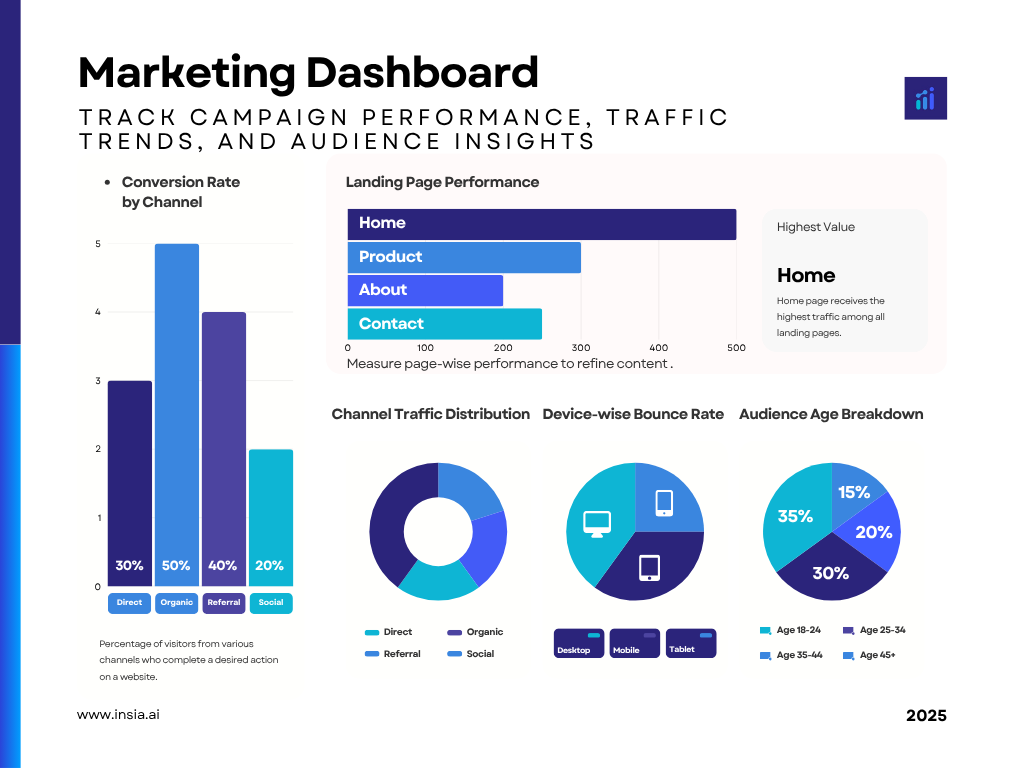
Benefits of Tracking Marketing KPIs
- Data-driven decision-making: Marketing analytics enables businesses to make informed decisions based on data insights. It provides a deep understanding of customer behavior, preferences, and market trends, allowing marketers to optimize strategies and campaigns for better results.
- Improved targeting and segmentation: By analyzing data, marketing analytics helps businesses identify and segment their target audience more effectively. It allows for personalized and targeted marketing messages, ensuring that the right message reaches the right audience, increasing engagement and conversion rates.
- Measuring and optimizing marketing performance: Marketing analytics provides metrics and KPIs that measure the effectiveness of marketing campaigns. By tracking key metrics i.e. conversion rates, customer acquisition costs, and ROI, businesses can identify underperforming areas and optimize their marketing efforts to improve overall performance.

-
Ad Campaign Approval Time
Average Time from Campaign Planning to Launch
-
Ad Impressions
Total Number of Ad Impressions
-
Ad Spend Efficiency
Revenue from Ads / Total Ad Spend
-
Bounce Rate
(Visitors Who Left Without Action / Total Visitors) * 100
-
Brand Awareness Index
Brand Mentions and Surveys or Google Trends Index
-
Campaign Return on Investment
(Revenue from Campaign - Campaign Cost) / Campaign Cost
-
Churn Rate
(Customers Lost / Total Customers) * 100
-
Click-Through Rate (CTR)
(Total Clicks / Total Impressions) * 100
-
Competitor Analysis Metrics
Various Metrics: Pricing, Social Media, Website Comparison
-
Content Engagement Rate
Content Interactions / Total Content Views
-
Content Publishing Timeliness
(Content Published On-Time / Total Content) * 100
-
Cost per Acquisition (CPA)
Total Marketing Spend / Number of Acquisitions
-
Cost per Click (CPC)
Ad Spend / Total Clicks
-
Cost per Lead (CPL)
Total Marketing Spend / Number of Leads Generated
-
Cost per Social Media Post
Total Cost of Content Production per Post
-
Customer Acquisition Cost (CAC)
Total Marketing Spend / Number of New Customers Acquired
-
Customer Advocacy Rate
(Customers Advocating for Brand / Total Customers) * 100
-
Customer Feedback Score
Average Feedback Score from Customers
-
Customer Lifetime Value (CLV)
Average Revenue per Customer * Average Customer Lifespan
-
Customer Retention Rate
(Customers Retained / Total Customers) * 100
-
Customer Review Count
Number of Customer Reviews Published
-
Customer Segmentation Effectiveness
Accuracy of Segmentation Metrics against Demographics
-
Daily Active Users (DAUs)
Unique Daily Users Interacting with Content
-
Demographic Analysis Metrics
Metrics of Demographic Analysis by Segments
-
Email Click Rate
(Clicks on Email Links / Emails Delivered) * 100
-
Email Open Rate
(Emails Opened / Emails Sent) * 100
-
Event Attendance Rate
(Attendees at Event / Total Invites Sent) * 100
-
Influencer Marketing ROI
(Revenue from Influencers - Cost of Influencers) / Cost of Influencers
-
Keyword Performance Trends
Keyword Rankings Over Time
-
Landing Page Conversion Rate
(Conversions from Landing Page / Visitors to Landing Page) * 100
-
Lead Quality Score
Score Based on Lead Qualification Metrics
-
Lead Response Time
Average Time to Respond to Lead Inquiries
-
Lead-to-Customer Conversion Rate
(Leads Converted to Customers / Total Leads) * 100
-
Market Share Growth
(Current Market Share - Previous Market Share) / Previous Market Share
-
Marketing Budget Utilization Rate
(Marketing Spend / Allocated Budget) * 100
-
Marketing Campaign Completion Rate
(Completed Campaigns / Planned Campaigns) * 100
-
Marketing Response Rate
(Customer Replies or Engagements / Total Messages Sent) * 100
-
Marketing ROI
(Revenue Attributed to Marketing - Marketing Spend) / Marketing Spend
-
Marketing Team Utilization Rate
(Hours Worked by Marketing Team / Total Available Hours) * 100
-
Marketing-Qualified Leads (MQLs)
Leads Meeting Marketing Criteria
-
Monthly Active Users (MAUs)
Unique Monthly Users Interacting with Content
-
Net Promoter Score (NPS)
(Promoters - Detractors) / Total Survey Respondents * 100
-
New vs Returning Visitor Ratio
(New Visitors / Returning Visitors)
-
Number of Blogs Published
Number of Blogs Published in Period
-
Number of Leads Generated
Total Leads Captured from Campaigns
-
Number of Social Media Posts
Total Posts Published on Social Media
-
Organic Traffic Growth
(Organic Traffic This Period - Organic Traffic Previous Period) / Organic Traffic Previous Period
-
Percentage of Repeat Visitors
(Repeat Visitors / Total Visitors) * 100
-
Percentage of Revenue from New Customers
(Revenue from New Customers / Total Revenue) * 100
-
Product Launch Success Rate
(Successful Product Launches / Total Launches) * 100
-
Sales Growth Attributed to Marketing
(Sales Growth - Sales without Marketing Influence) / Sales without Marketing Influence
-
Search Engine Ranking Position
Ranking on Search Engine Results Pages (SERP)
-
Share of Voice
(Brand Mentions / Total Mentions in Market) * 100
-
Social Media Engagement Rate
Total Social Engagements / Total Followers * 100
-
Social Media Follower Growth
(New Followers This Period / Total Followers Last Period) * 100
-
Time Spent on Site
Total Time Spent by Visitors / Total Sessions
-
Video View Count
Total Video Views in Period
-
Webinar Registrations
Total Webinar Registrations for the Period
-
Website Conversion Rate
(Conversions from Website / Total Website Visitors) * 100
-
Website Traffic Growth
(Current Period Traffic - Previous Period Traffic) / Previous Period Traffic